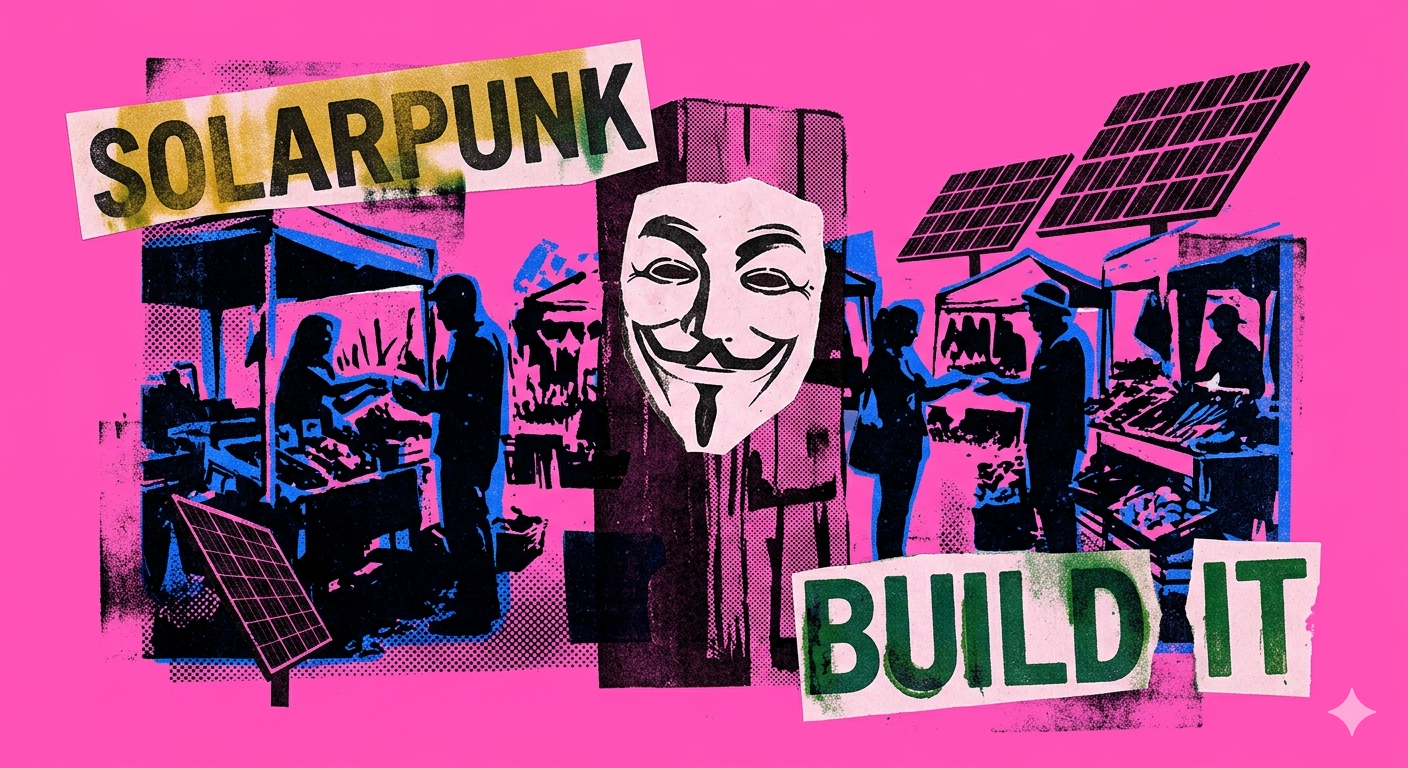
Algorithmic governance. Surveillance capitalism. Data sovereignty. AI and decentralized intelligence. When the machine becomes the market — and your attention, your behavior, your identity become the commodity.
Every algorithm encodes a worldview. The ranking function that determines what you see when you open a search engine, a social feed, or a news aggregator is not a neutral mathematical process — it is a policy. It decides what information is amplified and what is suppressed. It determines whose voice carries and whose fades. It embeds the values of its creators, their advertisers, and the regulatory environments they operate in. And unlike democratic policy, it is not subject to public scrutiny, legislative oversight, or meaningful appeal.
The economic logic driving algorithmic governance is engagement maximization. The metric is not truth, not wellbeing, not civic participation — it is time-on-platform and click-through rate. Research published by Facebook's own data science team demonstrated that the platform could measurably influence users' emotional states through feed manipulation. A later study showed the algorithm systematically amplified content that provoked outrage because outrage generates more engagement than calm. These were not accidents. They were optimization targets.
Cass Sunstein's work on filter bubbles describes one dimension of this problem: recommendation systems create epistemic silos in which individuals see only information that confirms existing beliefs. But the deeper problem is that a private entity with profit motives, answerable to no one, is making decisions about information flow that affect every democratic process on the planet.
The Austrian economists understood that no central planner could aggregate the distributed knowledge embedded in millions of individual economic decisions. The same logic applies to information more broadly. Centralized algorithmic governance of attention is as epistemically bankrupt as centralized economic planning.
Shoshana Zuboff coined the term "surveillance capitalism" to describe an economic logic she argues is as historically novel as industrial capitalism was in its time. The raw material of surveillance capitalism is not labor, land, or manufactured goods. It is human experience — specifically, the behavioral data that human experience generates at scale. Every search query, every click, every location ping, every pause in scrolling contributes to a behavioral data stream that surveillance capitalists claim as their private property, refine into predictive products, and sell to anyone willing to pay for the ability to influence future behavior.
The distinction Zuboff draws is critical: surveillance capitalism is not simply about knowing what you have done. It is about predicting and modifying what you will do next. The product being sold to advertisers is not your data — it is your future behavior. This reframes the entire privacy debate. The question is not "what do they know about me?" The question is: "to what extent is my future autonomy being systematically eroded by people who have financial incentives to manipulate my decisions?"
The most insidious aspect of this architecture is its invisibility. Industrial capitalism's exploitation was visible — you could see the factory, measure the wage, count the hours. Surveillance capitalism's extraction happens in the background of every digital interaction, without consent in any meaningful sense, and with effects on autonomy that are diffuse and cumulative rather than discrete and legible.
The agorist response is not to negotiate better terms with surveillance capitalists. It is to deny them the raw material. Encrypted communications, privacy-preserving browsers, anonymous networks, and privacy coins do not merely protect privacy — they deny surveillance capitalism its feedstock. Privacy is not a feature preference. It is an act of economic and political resistance.
Herbert Simon, in 1971, observed that information abundance creates attention scarcity. When information becomes cheap and plentiful, the scarce resource is not data but the cognitive capacity to process it. Attention becomes the bottleneck. Whoever controls attention controls everything downstream: what people believe, what they fear, what they buy, who they vote for, what they are unwilling to question.
The attention economy's most sophisticated practitioners are not its founders but its engineers. The variable reward mechanism — the same psychological pattern used by slot machines — was deliberately implemented in social media feed designs. The infinite scroll, the pull-to-refresh gesture, the notification badge: each of these is a carefully engineered behavioral loop designed to generate compulsive usage. Tristan Harris, who worked as a design ethicist at Google, described the explicit goal: "The race to the bottom of the brain stem."
The economic literature on attention treats it as a commons that has been enclosed. Open attention — the undirected, exploratory cognitive state in which creativity, learning, and deliberation occur — is structurally incompatible with the attention economy's requirements. The attention economy requires directed, monetizable, trackable engagement. It functions by preventing the open attention that makes genuine autonomy possible.
The practical counter-strategy begins with understanding that attention management is a political act. Time spent reading long-form, linear, untracked content is attention withdrawn from the extraction system. Deep work in environments without notifications is cognitive autonomy exercised. Local communities that build social bonds through physical presence are communities whose social infrastructure cannot be monetized, surveilled, or manipulated by algorithmic feed curation.
Data sovereignty begins with a simple premise that the current digital economy has systematically refused to honor: the data generated by your behavior is yours. Not the platform's. Not the advertiser's. Not the state's. The trail of interactions, locations, preferences, and relationships that constitutes your digital shadow is an extension of your person in a meaningful sense — it describes who you are, what you value, and how you live.
The technical architecture for data sovereignty already exists. Self-sovereign identity systems — built on decentralized identifiers (DIDs) and verifiable credentials — allow individuals to control what information they share, with whom, and for how long, without relying on a central identity provider. The World Wide Web Consortium (W3C) published the DID specification in 2022. Projects like Spruce Systems, Veramo, and the Decentralized Identity Foundation are building the infrastructure stack.
GDPR, the European Union's general data protection regulation, represented the most ambitious attempt to legislate data sovereignty into existing commercial infrastructure. The actual enforcement record is another matter. Between 2018 and 2024, the largest fines were levied against companies large enough to absorb them without changing behavior. The underlying extraction model continued. Legislative reform of surveillance capitalism is like taxing pollution from a factory while allowing the factory to keep operating.
The federated web offers a different architectural approach. ActivityPub — the protocol underlying Mastodon, Pixelfed, PeerTube, and the broader Fediverse — distributes social media across thousands of independently operated servers without a central authority controlling the data. You own your posts. You choose your server. You can migrate your identity and followers.
The ultimate form of data sovereignty is cryptographic. When your communications are end-to-end encrypted, your location is masked by a VPN or Tor, your payments are made in privacy coins, and your identity online is a pseudonym anchored to nothing traceable, the extraction apparatus of surveillance capitalism has nothing to work with. This is not paranoia. It is data minimization as a practice.

Bittensor is the most intellectually serious attempt yet to apply decentralized market logic to artificial intelligence. The premise is straightforward: AI development is currently dominated by a small number of resource-rich institutions that control the most capable models and extract the value those models generate. This concentration is not a natural feature of AI development. It is a consequence of the enormous capital requirements for training frontier models and the absence of a market mechanism that would allow distributed intelligence to compete with concentrated intelligence.
Bittensor creates that mechanism. It is a blockchain network in which validators assess the quality of intelligence produced by miners — where miners are AI models, training runs, or any computational process that can produce valuable outputs in response to queries. Validators rank miners by the quality of their responses. Miners earn TAO tokens in proportion to how well they are ranked. The result is a market for machine intelligence: a price signal that allocates resources toward more capable AI.
The counter-economic dimension is equally important. Intelligence is the most valuable input into the modern economy. Whoever controls the most capable AI controls an enormous strategic advantage in every domain: business, governance, military, information. Centralizing that capability in a handful of well-funded institutions is precisely the kind of accumulation that agorism identifies as the core problem. Distributed AI is not merely technically interesting. It is politically necessary.
Samuel Konkin III died in 2004, before Bitcoin, before Signal, before Tor had achieved mainstream adoption. But the framework he built in the New Libertarian Manifesto anticipated the digital counter-economy with remarkable precision. Counter-economics — voluntary market activity outside state sanction — scales when the cost of coordination drops below the cost of participation in the coercive economy. Digital cryptographic tools have dropped that cost to near zero.
The gray digital market is already the largest counter-economic sector in human history. Remote freelance labor paid in cryptocurrency, unreported. Content monetized through platforms outside the legacy financial system. Services exchanged in encrypted group chats without platform mediation. Software developed and deployed outside licensing regimes. None of this is coordinated. None of it requires organizational membership or ideological commitment.
Privacy coins represent the most advanced expression of techno-agorist infrastructure. Monero's ring signatures, stealth addresses, and RingCT make every transaction unlinkable and untraceable by default. Pirate Chain's zk-SNARK architecture extends this further. ZANO combines privacy with smart contract capability, enabling a counter-economy that is not just private but programmable.
The techno-agorist stack is already largely built. Encrypted communications through Signal and Session. Anonymous networking through Tor and I2P. Privacy payments through Monero and ARRR. Decentralized markets through atomic swaps and DEX protocols. The bottleneck is not tools — it is culture. Techno-agorism requires the same paradigm shift that all agorism requires: the recognition that the counter-economy is the primary strategy for building the free society.
The financial surveillance apparatus assembled by governments and banks over the past three decades is extraordinarily comprehensive. Know-Your-Customer regulations require identity verification for any significant financial service. Anti-Money-Laundering frameworks mandate transaction monitoring and reporting. FATF's Travel Rule requires custodians to transmit identifying information with every crypto transfer above a threshold. The direction of travel for state-controlled financial infrastructure is complete visibility and programmable control of every transaction.
The counter-direction is equally clear. Atomic swaps allow two parties to exchange different cryptocurrencies directly, peer-to-peer, without a custodian. Non-custodial decentralized exchanges like Thorchain extend this to cross-chain swaps at scale, without requiring account creation, identity verification, or any relationship with an intermediary. Lightning Network payments on Bitcoin enable near-instant, low-fee transactions between parties without broadcasting individual payments to the main chain.
The zero-knowledge proof represents the most technically significant development in this space. ZK-proofs allow one party to prove to another that a statement is true without revealing any underlying data. The ability to prove facts without revealing information dissolves the false choice between financial verification and financial privacy. You can prove you are creditworthy without revealing your balance. You can prove a transaction's legitimacy without revealing the parties involved.
The endgame of anonymous exchange infrastructure is a financial system in which voluntary transactions between consenting parties are technically outside the reach of institutional oversight — not because users are hiding wrongdoing, but because privacy is the default, and disclosure is the deliberate, consensual exception. This is what cash was, at scale, before digital payment infrastructure made cash economically marginal.
The convergence of cryptographic privacy, decentralized AI, and agorist counter-economic strategy is not accidental. Each emerges from the same fundamental recognition: that concentrated power over information, intelligence, and exchange creates the conditions for comprehensive control — and that technical architecture is the only durable answer to structural accumulation of power. Laws can be changed. Regulations can be captured. Political coalitions can be dissolved. Mathematics cannot be repealed.
Decentralized intelligence networks like Bittensor represent a qualitatively new tool in this strategy. For most of the digital economy's existence, the most capable cognitive tools were accessible only through platforms that could monitor usage, restrict access, and extract value from every interaction. The emergence of open-source large language models, distributed training infrastructure, and market protocols for AI capability changes this. Intelligence is becoming a commodity rather than a proprietary service.
The practical synthesis looks like this: privacy coins protect the financial layer of counter-economic activity. Encrypted communications protect the coordination layer. Decentralized AI provides the cognitive layer — research assistance, content production, code generation, analysis — without feeding behavioral data into a surveillance apparatus. Self-sovereign identity allows reputation and trust to be established without institutional intermediaries. Decentralized storage protocols preserve information outside the reach of censorship.
The philosophical point deserves emphasis: this is not about building a counter-culture or a fringe community. It is about building infrastructure. The agorist insight is that the counter-economy grows most effectively when it provides something people genuinely need — privacy, security, freedom from arbitrary restriction — at lower cost than the coercive economy. Decentralized intelligence, privacy payments, and encrypted communications are not worse versions of their centralized alternatives. In important respects they are better.
What is needed now is not more research or more theory. The intellectual frameworks are mature. The tools are deployed. The gap is between understanding the situation and acting in response to it. The infrastructure to answer that question with action, rather than opinion, exists right now.
Adam Smith's invisible hand was a metaphor for the emergent order that arises when individuals pursue their own interests within a framework of voluntary exchange. It was never meant to describe the economy as it actually functioned — riddled with state-backed monopolies, enclosures of commons, and coercive taxation — but as an ideal: the aggregate intelligence of decentralized decision-making, uncoordinated but coherent, producing outcomes that no planner could design.
The invisible hand has been rewired. The emerging economic architecture of the digital age is not a market in Smith's sense. It is an attention extraction apparatus with algorithmic governance, surveillance as a revenue model, behavioral modification as a product, and AI-driven optimization in service of concentration rather than distribution of value. The result is an economy that produces abundant information and scarce attention, extraordinary wealth and diffuse anxiety, accelerating technological capability and decelerating human autonomy.
Rewiring it requires building a different kind of hand. Not an invisible hand in the classical sense — but an intentionally constructed infrastructure for voluntary exchange that is cryptographically private by default, algorithmically neutral by design, and resistant to capture by any single actor by architecture. This infrastructure exists in pieces: privacy protocols, decentralized AI networks, non-custodial exchange, self-sovereign identity. The task is assembly.
The counter-economy does not need to defeat surveillance capitalism to succeed. It needs to be a better option for enough people to matter. Privacy that is easier to use than the alternative. AI that returns value to contributors rather than concentrating it in a lab. Exchange that is cheaper, faster, and more sovereign than the banking system. When the parallel infrastructure is genuinely superior for users' actual needs, the transition from the coercive economy to the voluntary one becomes a market outcome rather than a political victory.