01 / 10
Novapunks Dispatch — Issue 011

THE
DESKILLING
MACHINE

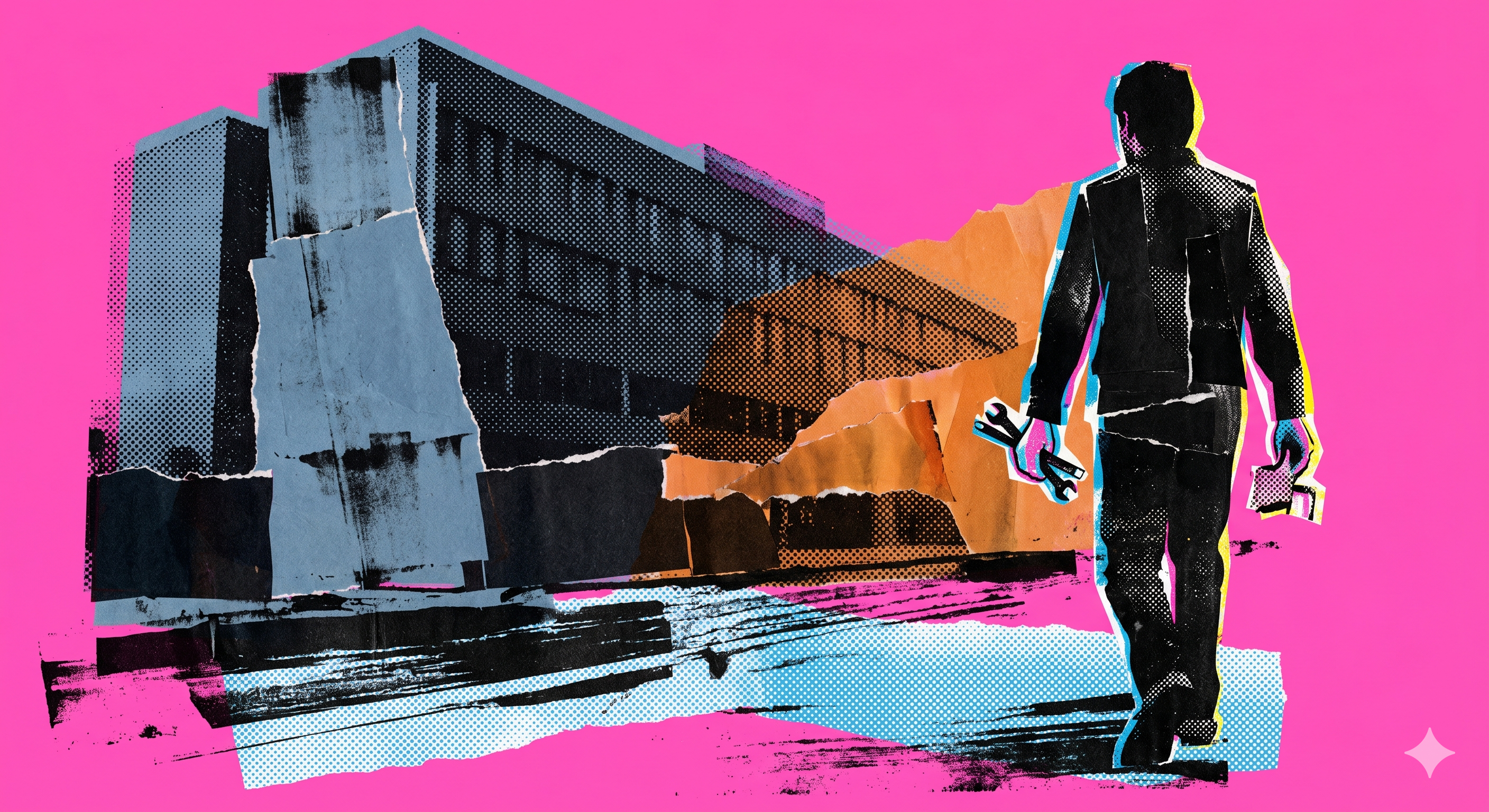
You live in a civilization built on a hidden bargain: comfort in exchange for capability. The supermarket takes the farming. The utility company takes the power generation. The healthcare system takes the healing. The school takes the learning. The platform takes the knowing. For each function surrendered, you receive a service and a dependency. The services are real. The dependencies are the point. What presents itself as modern convenience is more precisely understood as the systematic removal of human competence from ordinary life — a long, deliberate project whose architects understood something its beneficiaries did not: a person who cannot feed themselves, heal themselves, build shelter, or generate power is not free in any meaningful sense. They are managed. The deskilling machine did not happen to you. It was designed around you. What follows is an account of how it works — and how to begin working it in reverse.

02 / 10
The Forgotten World

The Vanishing
Baseline

There is a pattern in the study of societies that collapse: each generation accepts the degraded environment of their childhood as normal and loses sight of the historical baseline. The ecologist calls this shifting baseline syndrome — the moving reference point that makes each successive state of loss invisible to those who did not witness what preceded it. The same pattern applies, with remarkable precision, to human competence.

In 1900, most people in the industrialized world could grow food, preserve it through winter, build and repair basic structures, treat common ailments with herbal and practical knowledge, and maintain the tools they depended on for daily life. These were not specialist skills — they were ordinary human competencies transmitted through households and communities as a matter of course. By the turn of the twenty-first century, a significant majority of people in those same societies could do none of these things at even a basic level. The transition was gradual enough that no single generation experienced it as loss. What was surrendered over five generations reads from inside any one of them like progress.

This is the vanishing baseline. We have lost the ability to see what we have lost because the reference point itself has shifted. The historical record of widespread practical competence is not a nostalgic fantasy about simpler times. It is a documented fact about the range of capabilities that ordinary people possessed before those capabilities were systematically removed from the culture. Medieval craftspeople ran more of the infrastructure of their own lives than contemporary middle-class citizens do — not because they were freer in a political sense, but because the system organizing their society had not yet discovered that manufacturing helplessness could be more profitable than manufacturing product.

The mechanism by which this happened was not sudden. No decree was issued removing the right to grow food or generate power. The removal operated through economics: industrial production made home production uneconomical, then unmemorable, then unimaginable. Once a generation grew up without the practice, the knowledge ceased to be transmitted. Once the knowledge ceased to be transmitted, the next generation had no baseline against which to measure its own dependency. The absence became invisible precisely because it was complete. The first step in reversing the machine is recovering the ability to see what is missing — to name the dependency as a condition rather than accepting it as a fact of life.

03 / 10
The Architecture of Dependency

Manufactured
Helplessness

The deskilling of populations was not an accident of modernization. It was a design decision, made and remade across a century by institutions with a shared interest in the outcome: a population that cannot reproduce the conditions of its own existence without purchasing the inputs from someone else. The pattern is consistent across domains, which is the clearest evidence that it was never incidental.

Medicine is the most legible example. The early twentieth century saw the deliberate redefinition of "legitimate medicine" to exclude everything that could not be patented and sold at scale — herbs, nutrition, self-administered care, the community healing knowledge that had served populations for millennia. Medical schools were funded and shaped to teach pharmacological intervention as the primary response to illness. Regulatory bodies were captured to require professional licensing for activities that ordinary people had previously performed themselves. The business model was not health but chronic management: a cured patient is a lost customer; a chronically managed patient is an optimal revenue stream. The suppression of traditional healing knowledge was not incidental to this model. It was structural.

Food followed the same logic. Industrial agriculture consolidated production to the point where the knowledge of how to grow food became as culturally marginal as the land on which to grow it. Urban planning removed growing space. The economics of commodity food made home production appear irrational. Two generations later, the practice had vanished from most households, and with it the knowledge — because practical knowledge does not persist in the absence of practice. What had taken centuries to accumulate was lost in decades, and the loss was invisible because the replacement arrived simultaneously: you could always buy what you no longer knew how to produce.

Energy, construction, repair — the pattern repeats in each domain. Skilled trades were professionalized and regulated to the point where amateur practice became legally precarious. Building codes designed partly for genuine safety were extended until the idea of a household maintaining its own infrastructure required specialist permission. The result, across every domain of physical life, was a population that is technically sophisticated in the use of consumer products and practically helpless in the absence of the supply chains that deliver them. This helplessness is not nature. It is policy — and it has been extraordinarily profitable for those whose revenue depends on it.

04 / 10
Illich's Diagnosis

The Radical
Monopoly

Most monopolies control a market. The radical monopoly controls something prior: the definition of the need itself. An institution that has achieved radical monopoly has not merely captured market share — it has redesigned the human need it serves such that only the institution can satisfy it. This is a qualitatively different kind of power from market dominance, because it operates not on competition but on imagination.

The school has achieved radical monopoly over learning. It has produced a culture that conflates education with schooling, treats credentials as a proxy for competence, and genuinely cannot conceive of how learning might occur in the absence of institutional administration. This was not accidental. Compulsory mass schooling was designed in part to produce workers for industrial economies — people who could follow instructions, sit still, and accept the authority of the credentialed expert. The school achieved radical monopoly not by being the best way to learn but by making every other way to learn invisible, informal, and professionally unrecognized. The person who learns a craft through apprenticeship, who educates themselves through reading and practice, who transmits skill through community relationships — none of this counts, in the economy organized around credentialing, as real knowledge.

The hospital has achieved radical monopoly over healing. It has produced a medical culture in which pain, aging, and the ordinary challenges of maintaining a body have been removed from personal and community competence and transferred to a system whose profitability depends on the patient's continued inability to manage their own health. Not because hospitals are bad — they are essential for genuine emergencies — but because the institution has expanded its radical monopoly far beyond emergencies into the management of ordinary life, crowding out the self-care knowledge, community support structures, and nutritional and herbal practices that populations maintained for themselves before professional medicine colonized the entire domain.

The radical monopoly is not a market failure in the conventional sense. It is a market success achieved by eliminating the market — replacing the voluntary exchange between competent parties with mandatory dependency on a single provider that has redesigned the human need to require its services. Understanding this is essential to understanding why partial fixes fail. The radical monopoly cannot be reformed from within by improving the institution's offerings. It can only be broken from without — by rebuilding the competencies it eliminated, community by community, until the monopoly no longer controls the definition of the need.

05 / 10
The Philosophical Wound

The
Endarkenment

The narrative of modernity presents itself as a story of liberation. The Enlightenment threw off superstition, empowered the individual mind, and replaced dependence on tradition and authority with autonomy through reason. The story contains genuine truth. It also conceals a larger one.

What the materialist worldview accomplished was not only the liberation of inquiry. It also severed the connections through which ordinary people had organized their relationship to nature, community, and the transmission of practical knowledge across generations. The village healer, the seasonal farmer, the craftsperson who understood the properties of the materials they worked — these were not superstitious primitives awaiting the arrival of rational management. They were repositories of knowledge accumulated across many lifetimes of direct engagement with the physical world. When they were displaced by professional certification and industrial supply chains, what was lost was not only the economic function but the entire form of life in which that knowledge was embedded and transmitted.

The disenchanted world is not simply one in which people have stopped believing in spirits. It is one in which people have lost their felt connection to the processes that sustain their lives. Food arrives in a package with no legible origin. Power flows from an invisible grid with no remembered source. Medicine comes from a protocol authored somewhere else by someone else, governing the body of a patient who was not consulted. Water appears at a tap with no relationship to the watershed it draws from. The child who grows up in this world is not merely ignorant of practical skills — they have never had a felt relationship with the materials of their own sustenance. They have been, from birth, consumers of processes they do not understand and cannot influence.

This is what might be called, carefully, the endarkenment: not darkness in the metaphorical sense of ignorance, but the literal dimming of the human being's operative relationship to the physical world. A person who understands where their food comes from — who has grown it, preserved it, cooked it — inhabits a different experiential world than one who does not. The knowledge is not merely cognitive. It is sensory, practical, and relational. Recovering it is not nostalgia. It is the recovery of a form of being-in-the-world that the deskilling machine systematically dismantled — because a population with that felt relationship to its own sustenance is considerably harder to manage than one without it.

06 / 10
Karl Hess

Skills as
Non‑Confiscatable
Capital

A central bank can destroy the purchasing power of your savings in a decade. A government can freeze your accounts in an afternoon. A supply chain disruption can empty the shelves in seventy-two hours. None of these events can take from you what you know how to do. The re-skilling argument is sometimes framed in terms of self-reliance or emergency preparedness — useful framings that fail to capture the deeper economic logic at work.

Skills are the only form of capital that is genuinely immune to inflation, confiscation, and supply chain failure. They are also the form of capital most systematically discouraged by the institutions that profit from your inability to deploy them. The relationship is not coincidental. Consider what it would mean for the agricultural input industry if significant portions of urban households produced even a fraction of their own food. Consider what it means for the pharmaceutical industry if the management of common conditions moves back into the domain of personal and community knowledge. Consider what it means for energy utilities if neighborhoods begin generating meaningful portions of their own power. The economic model of modern industrial society depends not only on producing goods and services but on maintaining the conditions under which those goods and services cannot be dispensed with. Dependency is not a side effect of the consumer economy. It is its primary product.

This is why the re-skilling argument is not, at its root, about self-sufficiency as an aesthetic or a lifestyle. It is about withdrawing a specific form of economic demand from a system that requires your incompetence to generate its revenue. When you learn to grow food, you are not merely feeding yourself — you are reducing the extractable surface area of your life by one domain. When a neighborhood collectively acquires the skills to repair and maintain its own infrastructure, it becomes less legible as a collection of individual consumers and more coherent as a community capable of making choices the market cannot easily override.

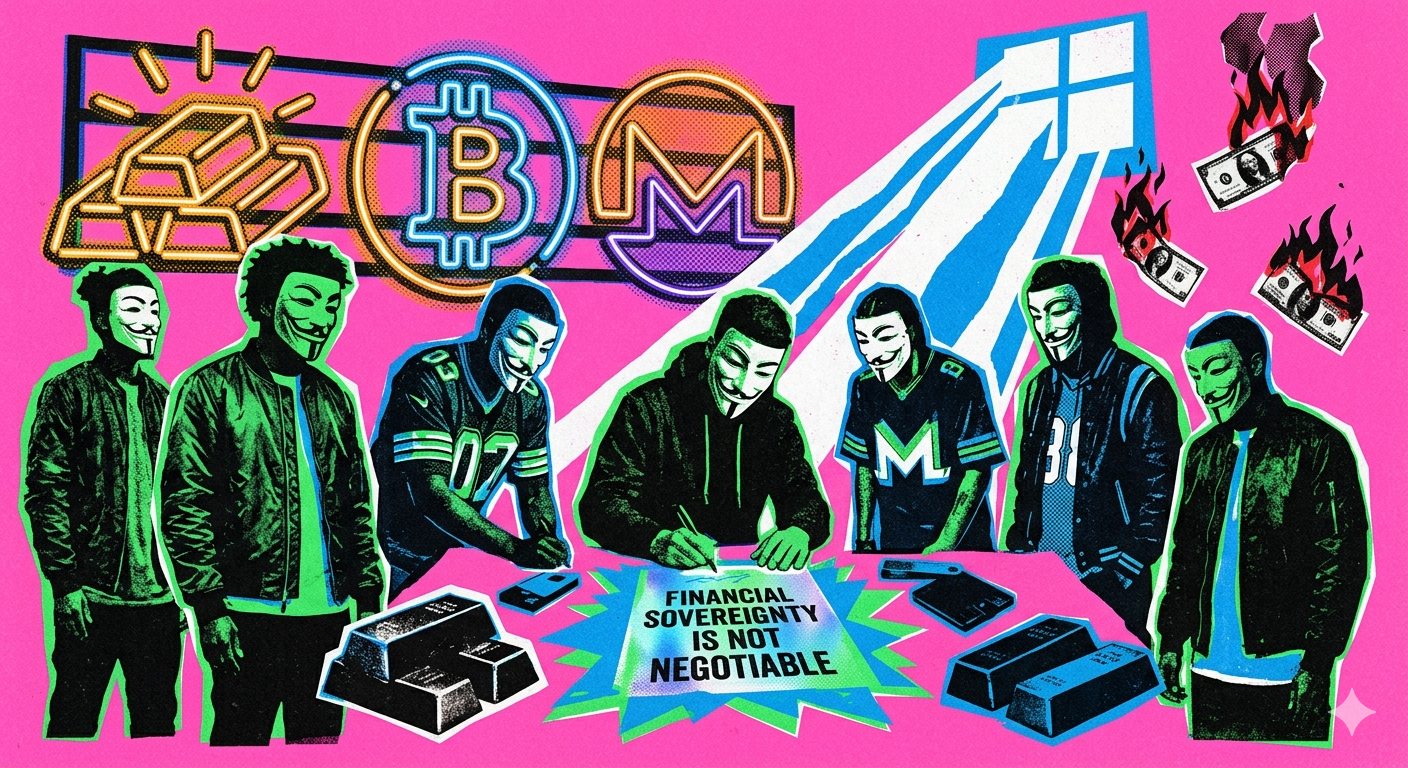
The monetary analogy is precise. Just as self-custody of digital assets removes the counterparty risk that institutional custody introduces — the bank that can freeze accounts, the platform that can delist assets — self-custody of practical skills removes the counterparty risk that institutional dependency introduces. You cannot be cut off from what you know how to do. The skill is always in your possession. It appreciates with practice. It is transferable to others at zero marginal cost. It generates compounding returns in the form of reduced dependency and increased resilience. It is, by every measure that matters, the soundest investment available to a person who takes their long-term sovereignty seriously.

07 / 10
Community Technology

The Workshop
as Commons

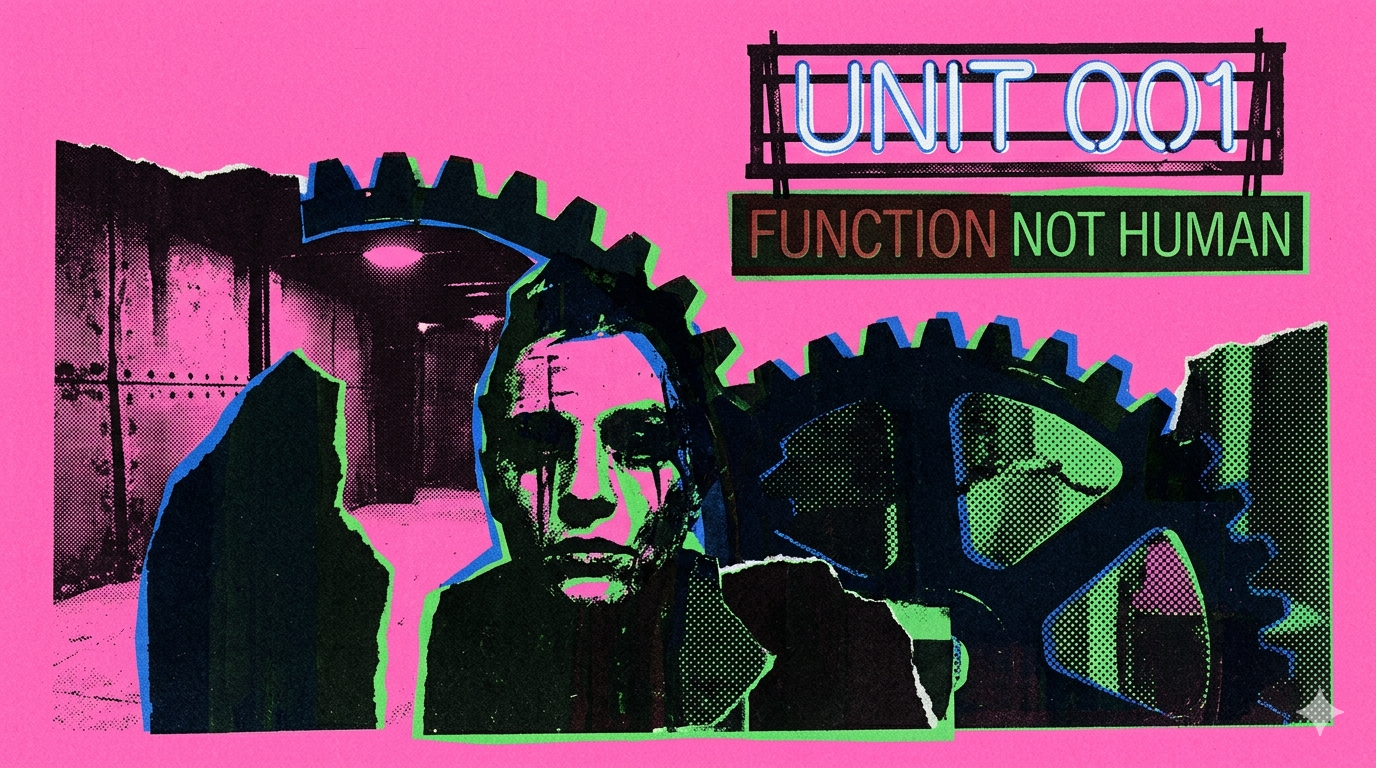
In the Adams-Morgan neighborhood of Washington D.C., starting in the 1970s, a small group of people began building what they called community technology — not the technology of corporations or governments, but technology that a neighborhood could build, maintain, repair, and adapt without dependence on remote expertise or distant supply chains. They built aquaponic fish farming systems on rooftops. They designed and installed neighborhood-scale solar energy systems. They equipped community workshops with machine tools and electronics benches that any resident could learn to use. They taught each other skills: plumbing, electrical work, food preservation, small-engine repair, construction, fermentation, electronics. The project was not utopian. It was practical. And it worked.

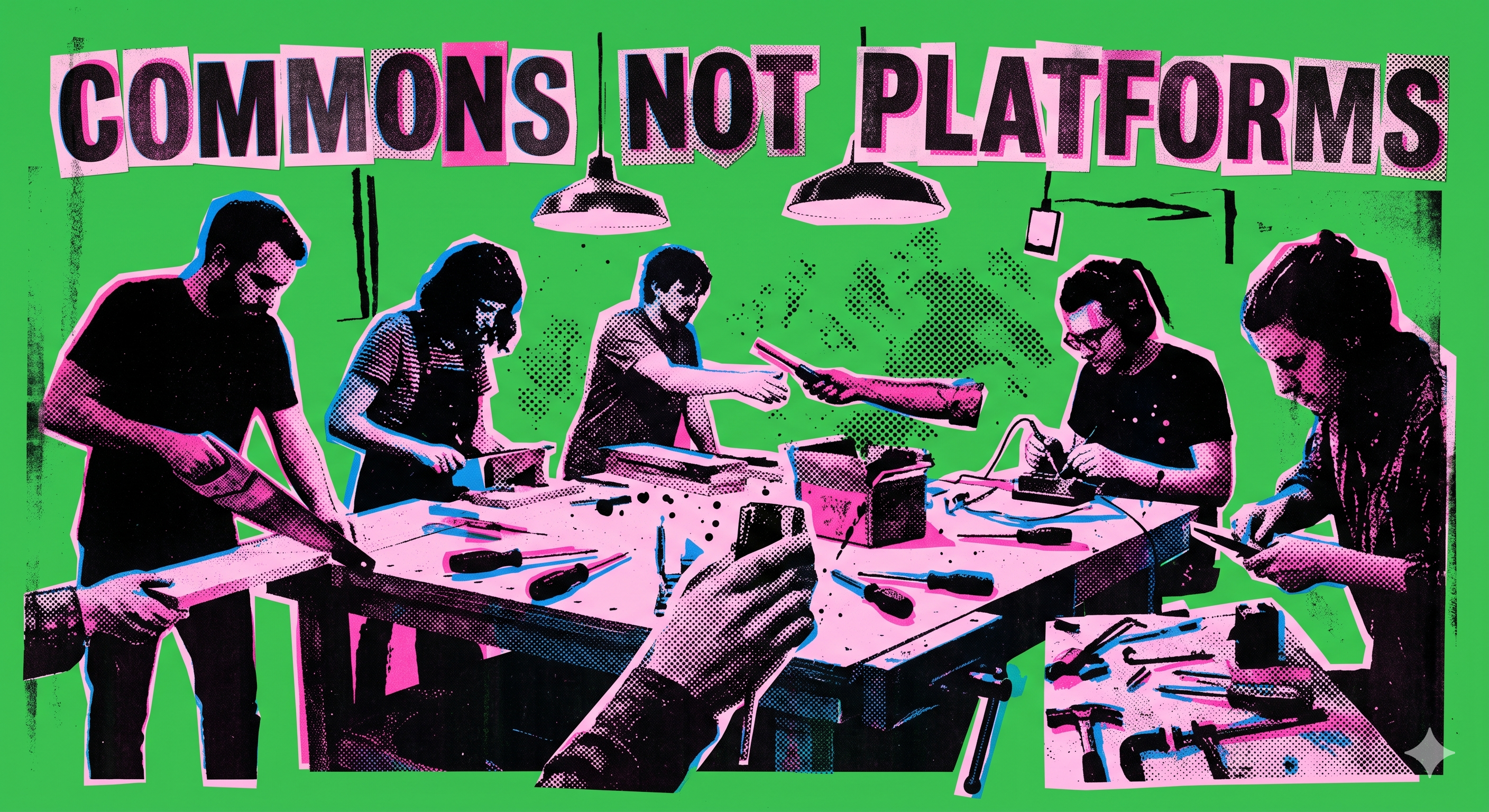
The neighborhood workshop is the physical commons that matters most and gets discussed least. The internet is frequently celebrated as a new kind of commons — a shared resource available to all participants, generating value through collective contribution. But the internet cannot fix your roof, repair your water pump, grow your food, or keep your household warm when the grid fails. The workshop — full of shared tools, shared knowledge, and the social relationships that make both accessible — is the commons that keeps the lights on when the abstract systems fail.

Its design principles are straightforward. The tools must be comprehensible: a neighborhood workshop contains equipment that residents can learn to use, maintain, and repair without professional certification. The knowledge must circulate: skills are taught by those who have them to those who want them, through direct transmission rather than credentialed instruction. The space must be genuinely shared: not a commercial service with a membership fee, but a community resource governed by the people who use it. The outputs must be local: the workshop exists to serve the neighborhood's capacity to maintain itself, not to produce for external markets.

What the Adams-Morgan experiments demonstrated was not that every neighborhood could achieve full self-sufficiency — they could not, and the honest architects of community technology never claimed otherwise. They demonstrated that every increment of local production and local competence is an increment of genuine independence, and that these increments compound. A neighborhood that generates some of its own food, produces some of its own power, and has collective knowledge sufficient to repair and maintain its own infrastructure is resilient in a specific way: it has a smaller surface area of exposure to the failure modes of systems it does not control. The workshop is where that resilience is built, stored, and transmitted. It requires no permission from any institution to establish. It is the infrastructure of the parallel economy made physical.
08 / 10
Praxis

The Re‑Skilling
Matrix

The re-skilling project begins with a simple diagnostic. For each of the fundamental domains of physical life — food, water, energy, shelter, health, and exchange — ask how dependent you currently are on single-source, opaque supply chains that you do not understand and cannot influence. Where the dependency is total and unexamined, that is where skill acquisition begins.

Food is the first domain and the most important. The knowledge of how to grow food at even a modest scale — container gardening, window-box herbs, participation in a community plot — reconnects you to the most fundamental dependency the system exploits and begins building the sensory and practical intelligence that expands with each growing season. Not because you will feed yourself entirely from a balcony, but because every increment of food sovereignty is an increment of actual independence, and the knowledge compounds nonlinearly. The person who has grown a tomato understands something about food that the person who has not grown a tomato cannot learn from a book. That understanding is the foundation on which larger capacity is built.

Energy literacy is the second domain. A working knowledge of electrical systems, solar installations, and battery storage does not require engineering credentials. It requires reading, observation, and practice. A household that understands its own energy system and participates in generating some portion of it has a qualitatively different relationship to the grid than one that is simply a passive customer of an invisible infrastructure. That difference in relationship is the beginning of the difference in resilience.

Health competence — not as a replacement for medicine in genuine emergencies, but as the reclamation of primary health knowledge that professional licensing systematically removed from the household — is the third domain. Nutrition, fermentation, herbal first aid, movement practices, the functional anatomy of a body and what it actually needs to maintain itself: none of this is exotic or dangerous. It is the body of knowledge that human populations possessed before the consolidation of healthcare into a system whose financial model depends on the patient's ongoing inability to manage their own condition. The goal is not to avoid the hospital when the hospital is necessary. It is to arrive at that threshold from a position of competence rather than ignorance. The person who understands their own body makes different choices — and different demands — from the one who does not.

09 / 10
La Boétie & Hess

Withdrawal by
Competence

"Be resolved to serve no more, and you are at once freed. I do not ask that you place hands upon the tyrant to topple him over, but simply that you support him no longer."
— Étienne de La Boétie, 1548

The most cited passage in the literature of voluntary servitude comes from a sixteenth-century French legal scholar who had never heard of the counter-economy but understood its mechanism with extraordinary precision. Freedom, he argued, requires nothing more and nothing less than the resolution to serve no more — the withdrawal of support from a system that can only stand because those subject to it hold it up. Pull away the support and the colossus falls of its own weight, without revolution, without confrontation, without the dramatic act that legitimizes the system it opposes by engaging it on its own terms.

The withdrawal La Boétie described was political — the withdrawal of consent, obedience, and legitimizing participation from a tyrannical power. But the mechanism is identical to the one that applies to the deskilling machine. The system of managed dependency cannot persist without your participation in the dependency. Every time you grow food instead of buying it, you withdraw a unit of demand from the industrial food system. Every time you repair something instead of discarding it, you withdraw from the consumption economy that requires your inability to repair. Every time you transmit a practical skill to a neighbor, a child, or a stranger, you extend the network of competence that the deskilling machine spent a century contracting.

This form of withdrawal is particularly powerful because it does not announce itself. The political dissident is visible and can be managed. The person who quietly learns to grow food, who maintains their own tools, who teaches their neighbors to ferment and repair and build, generates no target for institutional response. There is no protest to disperse, no platform to deplatform, no account to freeze. The competence simply exists and spreads, as competence always has — through demonstration, imitation, and the social transmission that was the original mechanism of human knowledge before institutions captured that function and credentialed it into dependency.

None of these individual acts, taken alone, threatens any major institution. Cumulatively and collectively, they build the parallel infrastructure that renders the old system progressively less necessary. This is the only form of exit that is both practically achievable and structurally permanent: not a confrontation that the system wins by engaging, but a quiet construction of the alternative that makes the original unnecessary. You do not need to overthrow the deskilling machine. You need to build what replaces it, neighborhood by neighborhood, skill by skill, until the question of what it would take to survive the system's failure has a different answer than it does today.

10 / 10
Synthesis

The Machine
in Reverse

The deskilling machine is a century old. Its reversal will not happen in a season. But it does not need to be complete to be effective — it needs to begin, and to compound. The most important characteristic of practical skill is that it behaves like a biological system: it spreads through direct transmission, improves with practice, and becomes easier to acquire in the presence of others who already possess it. A neighborhood that contains one person who knows how to build an aquaponics system, one who can rewire a circuit, one who understands fermentation and herbal medicine, one who can repair small engines, one who can install solar — that neighborhood is a qualitatively different kind of place than one where none of those skills are present. Not because any single competency changes everything, but because the presence of practical knowledge changes the culture of what is considered possible, and changes the calculation of what must be acquired from outside.

The deepest insight of this analysis is not economic. It is about the conditions of voluntary servitude. A managed population that has lost its connection to the physical processes of its own sustenance is a population available for management on whatever terms the managers choose to set — in perpetuity, because it cannot imagine the alternative. Not from malice, but from the simple absence of the baseline competence that would make the alternative imaginable. The deskilling machine did not only remove skills. It removed the cognitive capacity to recognize the loss, because recognition requires a reference point, and the reference point was removed along with the skill.

Rebuilding that reference point is itself a political act, prior to any specific practice. To understand that the dependency was manufactured is to understand that it can be unmade. To learn one practical skill is to discover that practical skills are learnable — which changes the relationship to every other domain of helplessness. The compounding effect of the first acquisition is not measured in food production or kilowatt-hours. It is measured in the expansion of what feels possible to a person who previously assumed that the walls of their dependency were the walls of reality.

The machine runs in reverse when enough people make that choice — not as political declaration but as daily practice. You need a seed, a tool, a neighbor, and the resolution to learn one thing this month that you did not know last month. The withdrawal of support from the system of managed dependency begins there. Quietly. Without permission. One skill at a time — until the colossus, deprived of the participation it requires, discovers that it is standing on a pedestal that has been, without fanfare, pulled away.